

Case study
Twelve priorities in three weeks. The problem wasn't technology.
How a specialist litigation firm across Northern Ireland and the Republic of Ireland found what to fix first, with a projected 20 to 30% more capacity without new hires.
- Client
- A specialist litigation firm across Northern Ireland and the Republic of Ireland
- What we did
- A Technology and AI Assessment
- How it was delivered
- Fixed price and fixed scope, with no software to sell
- How long
- Three weeks, from the start to the leadership debrief
The challenge.
The firm was profitable, and the team was capable. But the owner wanted more than a practice that depended on them. They wanted a business that ran well enough to be valued when they came to sell.
Day to day, the owner was the decision point for every new case. How many cases the firm had lived in people's memories, not in its systems. Staff had built their own workarounds: their own templates, their own reminders, their own ways of sharing documents. It worked, but not the same way twice.
What we did.
The Assessment ran in four stages over three weeks, alongside the firm's leadership:
Map.
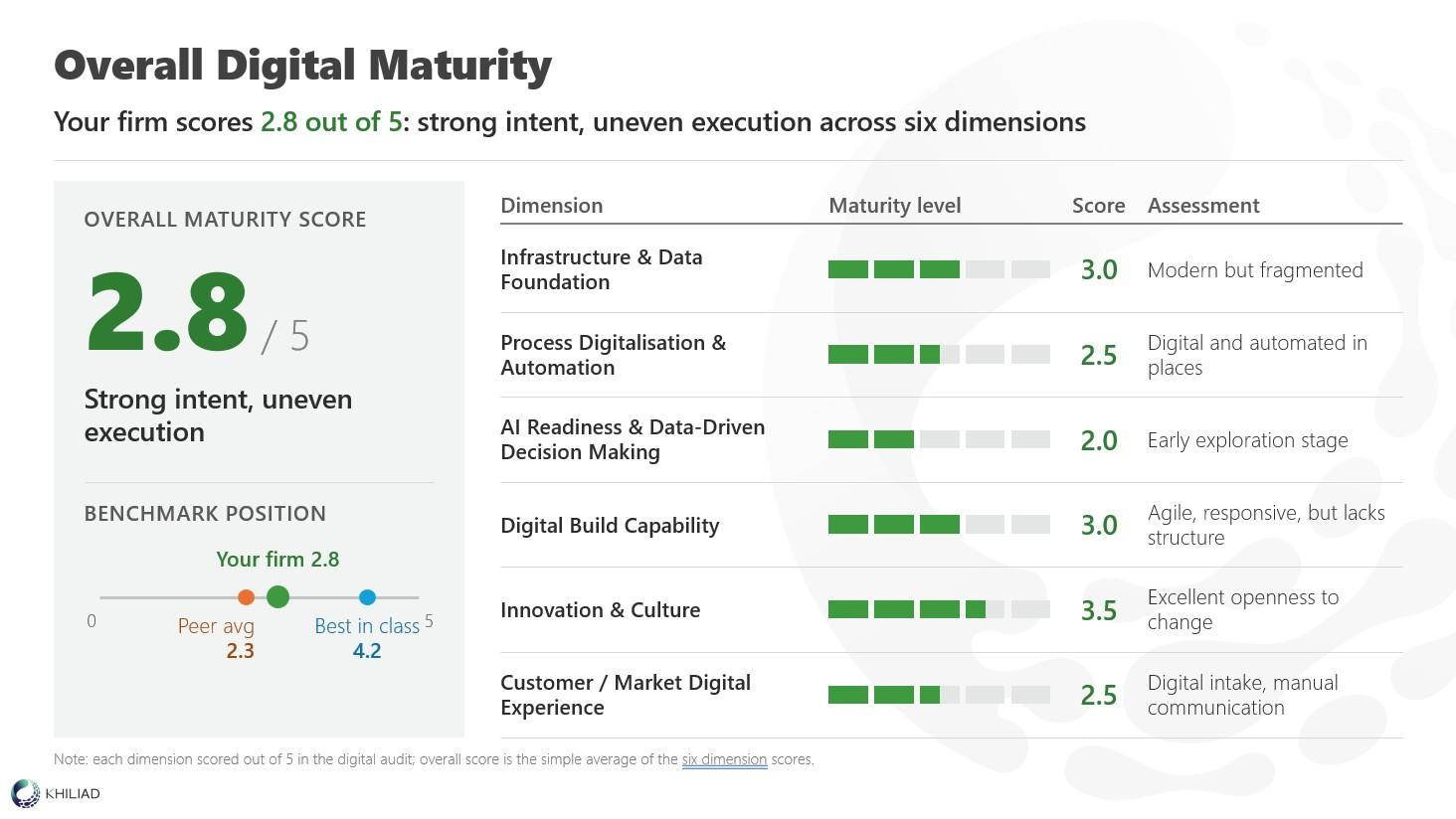
A questionnaire across six areas of the firm, from its systems to its clients' experience.
Listen.
Confidential, anonymised interviews with people at every level, 45 to 60 minutes each, to hear what actually happens, not what's supposed to.
Benchmark.
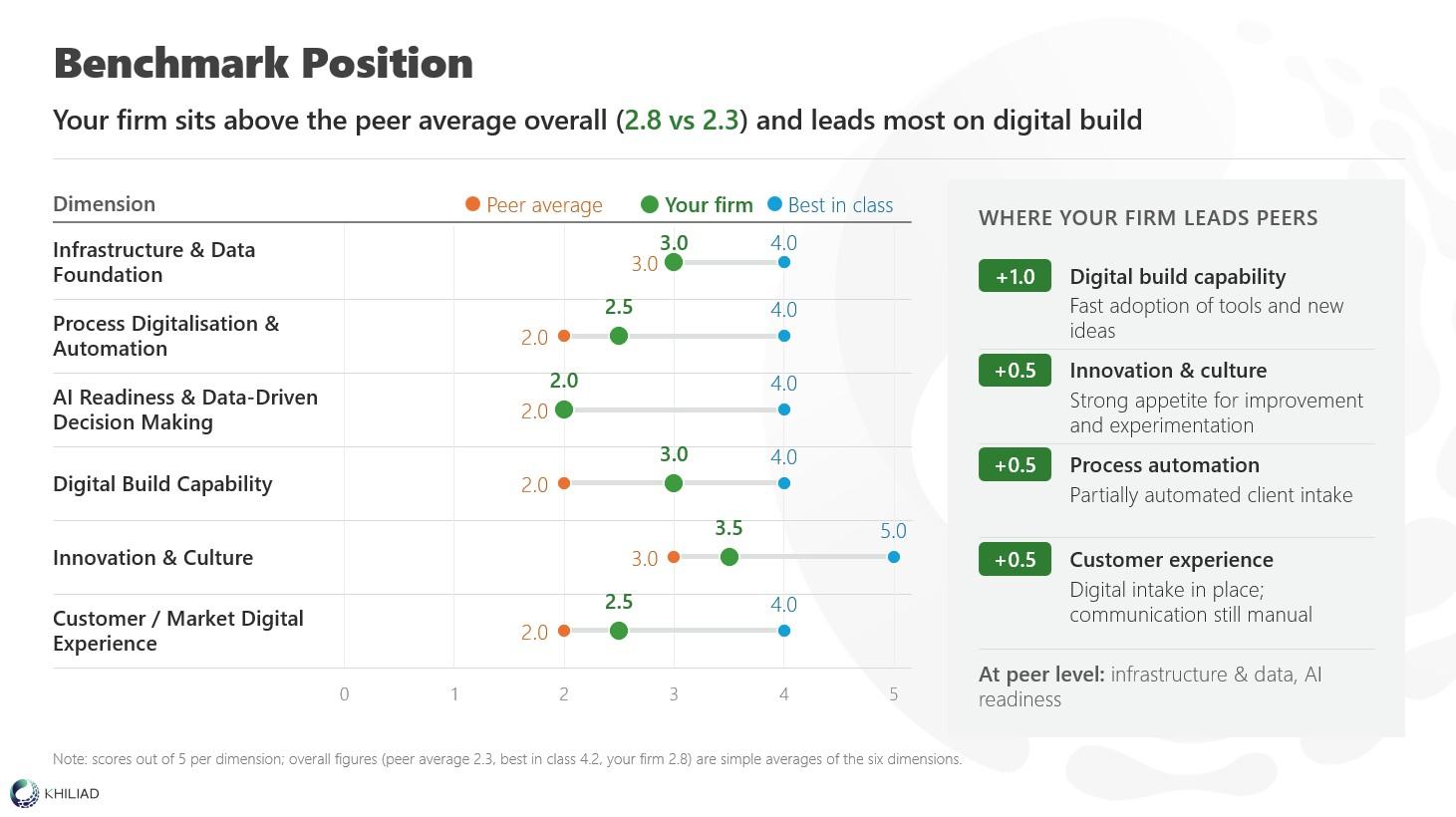
Each area scored against the market average and the best firms of a similar size.
Roadmap.
Twelve priorities in three phases over 18 months, presented at a leadership debrief with clear next steps.
The firm scored 2.8 out of 5 across the six areas. Not flattering, but honest, and that's what made the roadmap useful.
What we found.
Technology wasn't the problem. Discipline and structure around the tools the firm already had were. So the roadmap starts with what the firm already owns, before anything new is bought.
- The first three months: tighten the basics. Switch on case management features nobody used. One set of templates and file names. A simple AI policy. An end to unsafe document sharing.
- Months three to nine: take routine work off the team. A client portal, so clients phone less for updates. Website enquiries going straight into case management. Call recording and transcription. Reports on caseload and how long cases take.
- Months nine to 18: build for the long term. Marketing figures linked to case data. The portal opened to third parties. AI search and summaries. A way of running the firm that's ready for succession.
The result.
Projected over 24 months
- 20 to 30%
- more capacity, without new hires
- £150,000+
- a year of capacity freed up across the firm
- 50 to 80%
- fewer routine client update calls
- £0.5m to £1m
- projected valuation uplift at exit
The projections are benchmarked against comparable change programmes. The first phase is designed to show visible results within 90 days, which builds trust for the longer changes. No software was sold: the Assessment stood on its own, and the roadmap makes the most of the systems the firm already had before recommending anything new.
It was a law firm, but the questions weren't about law. They were about how the work gets done, and they're the same questions we ask any business.
“What I got from Khiliad was clarity, a coherent picture of the firm and a clear sense of what to tackle first, which is genuinely hard to do from the inside.”
Not sure which way in?
A first conversation costs nothing. We'll tell you where we'd start, and if the answer is not yet, we'll say so.
Or email info@khiliad.com, or .